

Porto is a small city with a big personality. Old tiled houses stack up the hillside above the Douro River, port wine cellars line the opposite bank, and most of the sights sit within walking distance of each other. That compact size is great news for hotel hunters, because the best hotels in Porto tend to cluster in a handful of areas, each with its own feel.
Pick the wrong area, though, and your stay changes fast. A riverside room in the old town puts you in the middle of the postcards, but it can be noisy at night. A quiet palace hotel ten minutes uphill gives you space and calm, plus a steep walk home after dinner. The area matters as much as the hotel itself in this city.
This guide walks you through Porto’s main hotel areas, the kinds of stays the city does well, and four well-known hotels that show what to expect. You will also find practical checks on hills, noise and airport transfers, plus the best times of year to book.

Contents
- 1. Where to Stay in Porto: The Main Hotel Areas
- 2. The Kinds of Stays Porto Does Best
- 3. Four Well-Known Hotels Worth a Look
- 4. River View or Old Town: What to Check Before You Book
- 5. Getting to Your Hotel: Airport, Metro and Trains
- 6. The Best Time to Visit Porto and Book Your Stay
- 7. How to Book the Best Hotels in Porto for Less
- Frequently Asked Questions
- Final Thoughts
1. Where to Stay in Porto: The Main Hotel Areas
Porto splits into a few clear zones. Most first-time visitors stay in or near the old town, but each area below suits a different kind of trip.
Ribeira: The Old Town on the River
Ribeira is the riverside quarter you see on every Porto postcard. Narrow lanes, tall painted houses and restaurant terraces face the Douro, and the Dom Luís I Bridge rises at one end. Hotels here sit inside old buildings, so rooms can be compact, but you step outside straight into the city’s liveliest streets. It is the most convenient base for a short first trip, and the noisiest.
Baixa: Downtown and the Grand Avenues
Just uphill from Ribeira, Baixa is Porto’s downtown. Avenida dos Aliados, São Bento station and the Bolhão market anchor this area, and the big shopping streets run through it. Hotels here range from grand historic properties to sensible mid-range chains. You get flat-ish streets, easy metro access and a short downhill stroll to the river.
Cedofeita: The Arts District
North of Baixa, Cedofeita centers on Rua Miguel Bombarda, a street packed with galleries, design shops and small cafes. The hotels here lean boutique, and the neighborhood feels local rather than touristy. It suits travelers who want a creative base and do not mind a 15 minute walk to the riverfront.
Boavista: Space, Business and the Sea Breeze
Further west, Boavista is a wide, modern avenue district with larger hotels, the Casa da Música concert hall and the Serralves museum and gardens nearby. Rooms tend to be bigger and streets quieter. Keep walking west and you reach Foz do Douro, where the river meets the Atlantic and a slower, seaside version of Porto begins.
Vila Nova de Gaia: Wine Cellars and the Best View
Cross the bridge and you are in Vila Nova de Gaia, a separate city that holds the famous port wine cellars. Hotels here look back at Porto, which means Gaia arguably has the finest view in the whole area. The cellar streets stay busy by day and calm at night, and the metro and the bridge walk keep Porto’s old town within easy reach.
2. The Kinds of Stays Porto Does Best
Porto’s hotel scene has a strong local flavor. These are the styles the city does better than most.
Historic Palaces Turned Hotels
Porto has a habit of turning old palaces and mansions into hotels. Expect high ceilings, grand staircases and rooms that all differ slightly in shape. If you like a building with a past, start your search with these.
Small Boutique and Design Hotels
The arts district and downtown side streets hold many small hotels run with real care: a dozen or so rooms, strong breakfasts and staff who know the neighborhood. They book out early in spring and autumn, so reserve ahead.
Riverside Hotels With a View
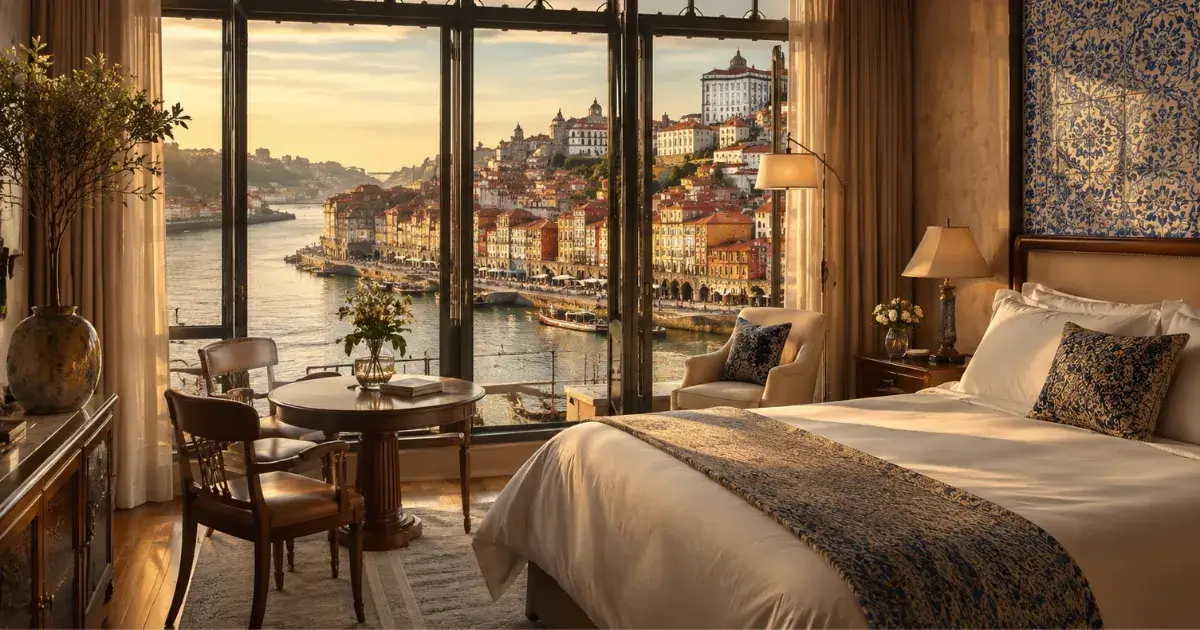
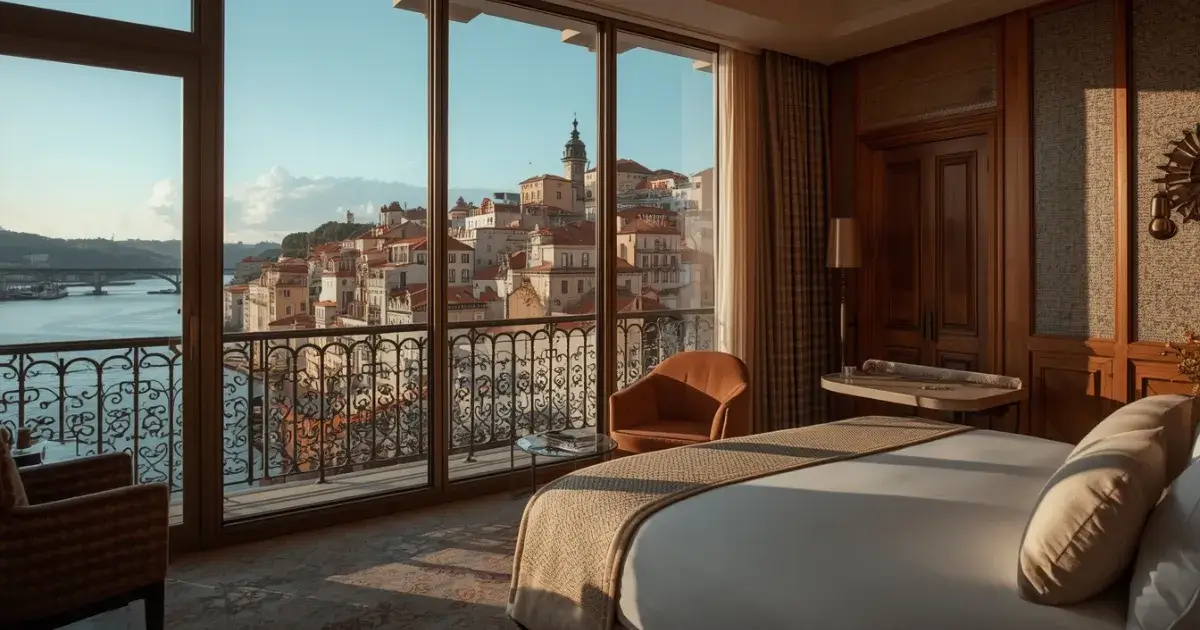
A Douro view is Porto’s signature upgrade. Rooms facing the river in Ribeira or across in Gaia cost more than street-facing rooms in the same hotel, and most guests who pay the difference say it was worth it. Book a named river-view room rather than hoping for one at check-in.
Wine Hotels in Gaia
Gaia’s wine hotels pair a stay with the port trade itself: cellar tours, tastings and dinners built around local wine. They suit couples and food lovers who plan to spend real time in the cellars rather than just passing through.
3. Four Well-Known Hotels Worth a Look
You do not need a long list to understand Porto’s range. These four names show the spread, from a wine hotel in Gaia to a palace downtown. Use them as benchmarks when you book hotels in Portugal and compare similar options nearby.
The Yeatman, Gaia
The Yeatman is Porto’s best-known wine hotel, set on the Gaia hillside above the cellars. Every part of it leans into wine, from the cellar and tastings to a serious restaurant, and its terraces look straight across the river to the old town. It is the classic choice for a special-occasion stay.
Pestana Vintage Porto, Ribeira
This hotel sits right on the Ribeira waterfront inside a group of restored historic houses. Rooms face either the river or the old town lanes, and the location puts the bridge, the cellars walk and dozens of restaurants at your door. It is hard to stay more central than this.
InterContinental Porto, Palacio das Cardosas
Housed in a restored palace on Praça da Liberdade at the top of Avenida dos Aliados, this hotel gives you a grand downtown address a few minutes from São Bento station. It works well for travelers who want a polished, full-service base with the old town a short walk downhill.
Torel Palace Porto, Baixa
Torel Palace is a boutique option in a nineteenth century palace in the Baixa area, themed around Portuguese writers. It has the quiet, personal feel of a small hotel with the bones of a mansion, and it sits within walking distance of both the shopping streets and the river.
4. River View or Old Town: What to Check Before You Book
Porto rewards a little homework. These checks save most of the common disappointments.
The Hills Are Real
The old town climbs steeply from the river. A hotel that looks close on the map may involve a hard uphill walk, which matters with luggage, small children or limited mobility. Check the street on a map, look at recent guest comments about the walk, and ask the hotel about the easiest route from the metro.
River View vs Old Town Noise
Ribeira’s waterfront is lively late into the evening, especially in summer. A river-view room on a low floor can mean music and crowd noise with the windows open. If you sleep lightly, ask for a high floor, a room facing the inner courtyard, or look at Gaia, where nights are calmer and the view is of Porto itself.
Room Size in Old Buildings
Historic houses make charming hotels but small rooms and bathrooms. Read the stated room size, not just the photos, and pick the next category up if you travel with big suitcases. Newer hotels in Boavista and Gaia generally give you more space for the same money.
Air Conditioning and Heating
Porto summers are warm but evenings cool down, and winters are mild and damp. Older buildings vary, so confirm air conditioning for a July or August stay and heating for a January one. Guests mention this detail often in mixed reviews.
5. Getting to Your Hotel: Airport, Metro and Trains
Porto is easy to arrive in. A simple plan for the transfer makes the first hour of the trip painless.
From Porto Airport by Metro
Francisco Sá Carneiro Airport sits about 11 km northwest of the center. The metro’s violet Line E runs from the airport to Trindade station downtown in roughly half an hour, with trains through the day and evening. From Trindade, most Baixa hotels are a short walk, and you can change lines for other areas.
Taxis, Ride Apps and Transfers
A taxi or ride app from the airport to the old town usually takes 20 to 30 minutes depending on traffic, and saves the hill walk with bags. Many hotels can arrange a transfer if you ask when booking, which is worth it for late arrivals.
Arriving by Train
Trains from Lisbon and most of Portugal arrive at Campanhã station, east of the center, with a quick metro or a short local train ride onward to São Bento. São Bento itself, with its famous tiled hall, drops you right in Baixa. If your hotel is in Ribeira, expect a downhill walk or a very short taxi ride from either station.
6. The Best Time to Visit Porto and Book Your Stay
Porto is a year-round city, but the season shapes both prices and crowds.
Spring and Autumn: The Sweet Spots
April to June and September to October bring mild weather, thinner crowds and fair hotel rates. September also lines up with the grape harvest in the Douro Valley, a fine time if wine drives your trip. For most travelers, these months are when the best hotels in Porto are easiest to book at sensible prices.
Summer and São João
July and August are hot, busy and the most expensive months. The biggest night of the year is the Festa de São João on 23 June, when the whole city parties in the streets. It is a wonderful time to visit, but hotels near the old town sell out well ahead, so book early or expect slim pickings.
Winter: Quiet Streets, Lower Rates
Winter brings rain and short days, but also the lowest hotel prices of the year and a calmer old town. Pack for wet weather, choose a hotel with good heating, and enjoy having the cellars and museums mostly to yourself.
7. How to Book the Best Hotels in Porto for Less
The same room can vary a lot in price between sites and dates. A few habits keep you on the right side of that spread.
Compare the Total Price, Not the Headline
Start by comparing totals with taxes and fees included. You can compare Porto hotels side by side, then check the final checkout price on a second platform such as Booking.com before you commit. Our step-by-step guide on how to book a hotel walks through the full process if you want a refresher.
Keep Dates Flexible if You Can
Shifting a stay by a night or two, or swapping a weekend for midweek days, often cuts the rate in busy months. If you are flying in, it also helps to compare flight options before you lock the hotel, since our guide to booking cheap flights to Europe shows how much fares move by date.
Book the View on Purpose
In Porto, the view is half the product. Decide before you book whether a Douro-facing room matters to you, then choose the named room type that guarantees it. Paying a little more for the room you actually want beats saving money on one that disappoints.
Reserve Early for Peak Dates
Small boutique hotels and palace properties have few rooms, and the best ones go first for São João, Easter and the harvest weeks. Booking a refundable rate early, then re-checking prices closer to the trip, is a sound low-risk routine. Start your search early and book hotels in Portugal once the right room appears rather than waiting for a last-minute miracle.
Frequently Asked Questions
What is the best area to stay in Porto for first-time visitors?
Baixa and Ribeira are the safest bets for a first trip. Baixa gives you flat streets, the metro and grand avenues, while Ribeira puts you on the riverfront in the middle of the old town. Both keep the main sights within walking distance.
Is it better to stay in Ribeira or across the river in Gaia?
Ribeira is livelier and closer to most sights, but it can be noisy at night. Gaia is calmer, holds the port wine cellars and has the famous view back across to Porto. Couples on a wine-focused trip often prefer Gaia, while short city breaks suit Ribeira.
How far is Porto Airport from the city center?
The airport is about 11 km from downtown. The metro Line E reaches Trindade station in roughly 30 minutes, and a taxi or ride app takes around 20 to 30 minutes depending on traffic.
When is the best time to visit Porto?
Spring (April to June) and autumn (September and October) offer mild weather, smaller crowds and fair prices. Summer is the busiest and priciest season, and the São João festival on 23 June is the city’s biggest night of the year.
How many nights do you need in Porto?
Two full days cover the old town, a cellar tour in Gaia and the main sights without rushing. Add a third day if you want a Douro Valley trip or a slower pace with time in the museums and cafes of Cedofeita and Boavista.
Final Thoughts
Porto makes choosing a hotel simpler than most cities its size. Decide your area first, old town energy in Ribeira, downtown ease in Baixa, creative calm in Cedofeita, space in Boavista or wine and views in Gaia, and the right hotel usually follows. Check the hills, the noise and the room size before you pay, and book the view on purpose if it matters to you.
Do that, and finding the best hotels in Porto for your trip stops being a gamble and becomes one of the pleasures of planning it.
- Pick your area first: Ribeira, Baixa, Cedofeita, Boavista or Gaia.
- Check the walk: Porto’s old town hills are steep, especially with luggage.
- Choose river view or quiet street on purpose, and book the named room type.
- Watch the noise in Ribeira if you sleep lightly; Gaia nights are calmer.
- Use the metro Line E from the airport to Trindade for a simple arrival.
- Travel in spring or autumn for mild weather and fairer rates.
- Compare total prices across booking sites, and reserve early for São João and harvest season.