

Introduction
Booking a hotel is an important part of any trip, whether you are traveling for vacation, business, or family visits. Knowing how to book a hotel correctly helps you save money, avoid stress, and ensure a comfortable stay.
Today, hotel booking is mostly done online using websites and apps, making the process faster and more convenient than ever. However, with so many options available, it is important to follow the right steps to choose the best hotel for your needs.
This guide will explain the entire process in simple steps so anyone can book a hotel confidently.
Step 1: Decide Your Travel Needs
Before you start searching for hotels, you need to clearly understand your travel requirements. This step is important because it helps you filter out unnecessary options and focus only on hotels that match your needs and budget. Without a clear plan, you may get confused by too many choices and end up selecting the wrong hotel.
Key things to decide:
- Budget per night
- Travel purpose (vacation, business, family trip, etc.)
- Location preference (city center, near airport, near attractions)
- Number of guests staying in the room
- Required amenities such as Wi-Fi, breakfast, parking, air conditioning
Once you define these details, it becomes much easier to search for the right hotel. You will save time, avoid stress, and improve your chances of finding a comfortable stay that fits your expectations.
Step 2: Search for Hotels Online
After deciding your travel needs, the next step is to search for hotels online. This is the fastest and most convenient way to explore different accommodation options around the world. Online platforms allow you to compare prices, view photos, read reviews, and check availability instantly.
Popular websites include:
When learning how to book a hotel, choosing the right booking platform is very important. Different websites offer different prices, features, and benefits. Below are some of the most popular hotel booking platforms with their descriptions, advantages, and disadvantages.
1. Trip.com
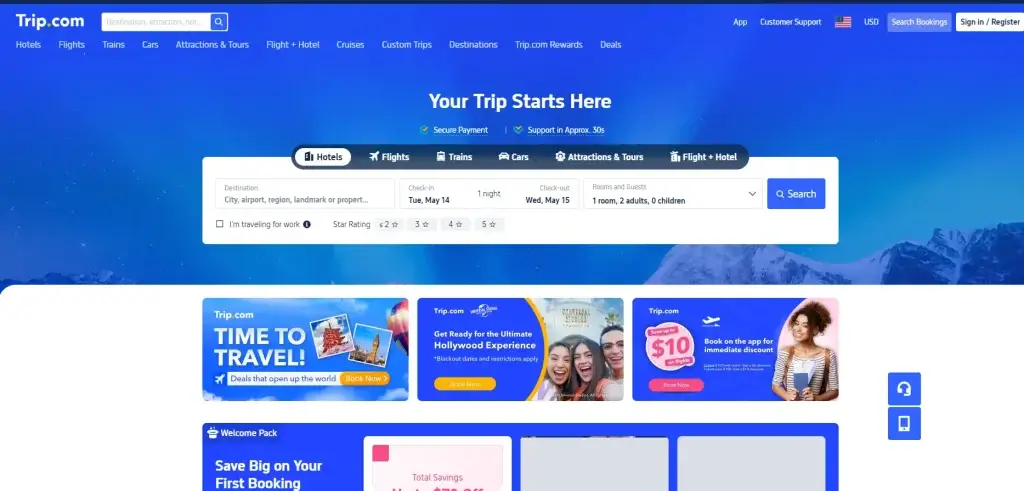
Trip.com is a global online travel platform that allows users to book hotels, flights, trains, airport transfers, and complete travel packages in one place. It is widely used across Asia, Europe, and other international destinations, making it a convenient option for travelers who want a single platform for all travel needs.
Trip.com offers access to thousands of hotels ranging from budget stays to luxury resorts. The platform is especially known for its competitive pricing and frequent promotional offers. Many travelers use it for both last-minute bookings and planned trips because it often provides discounted rates compared to standard hotel prices.
The website and mobile app are designed to be user-friendly, allowing users to search hotels by location, price, rating, and amenities. It also provides multilingual customer support, which is helpful for international travelers. Additionally, Trip.com often includes bundle deals where users can combine hotels with flights or transportation services for extra savings.
Pros
- Wide selection of hotels worldwide
- Often offers discounted prices and flash deals
- Easy-to-use mobile app
- 24/7 customer support in multiple languages
- Useful for booking flights and hotels together
Cons
- Some deals require careful reading of terms
- Refund processing can take time in some cases
- Fewer loyalty benefits compared to hotel chains
2. Expedia

Expedia is one of the largest and most established online travel agencies in the world. It provides a complete travel booking system where users can reserve hotels, flights, rental cars, vacation packages, cruises, and activities all in one platform.
Expedia is known for its strong global presence and reliability. It partners with thousands of hotels worldwide, offering a wide variety of accommodation options from budget hotels to luxury resorts. One of its most popular features is the ability to book bundled travel packages, which often include hotel and flight combinations at discounted rates.
The platform also offers a rewards program where users can earn points on bookings and redeem them for discounts on future travel. Expedia’s interface allows users to easily compare hotel prices, check availability, read guest reviews, and view detailed property information, making it a convenient option for both casual and frequent travelers.
Pros
- Strong hotel and flight bundle deals
- Reliable global platform
- Rewards program for frequent users
- Easy comparison of prices and options
- Trusted by millions of travelers
Cons
- Some hotels may charge extra hidden fees
- Customer service response can vary
- Prices may be slightly higher without bundles
3. Agoda

Agoda is a leading online hotel booking platform that is especially popular for offering affordable accommodation options in Asia and other international destinations. It focuses primarily on hotel reservations but also provides flights, airport transfers, and travel deals in selected regions.
Agoda is well known for its competitive pricing strategy, often offering exclusive discounts, flash deals, and “secret prices” that are not available on other platforms. This makes it a preferred choice for budget travelers and those looking for last-minute hotel deals.
The platform features a large selection of properties, including hotels, serviced apartments, hostels, and resorts. Its mobile app is highly rated for providing additional discounts and special mobile-only offers. Agoda also provides detailed hotel descriptions, guest reviews, and photos to help travelers make informed decisions before booking.
Pros
- Very competitive prices in Asia and global destinations
- Frequent discounts and “secret deals”
- Large selection of budget hotels
- Easy mobile booking experience
- Strong last-minute hotel deals
Cons
- Some bookings have strict cancellation rules
- Customer support can be slow at times
- Prices may change quickly during peak demand
4. Tripadvisor
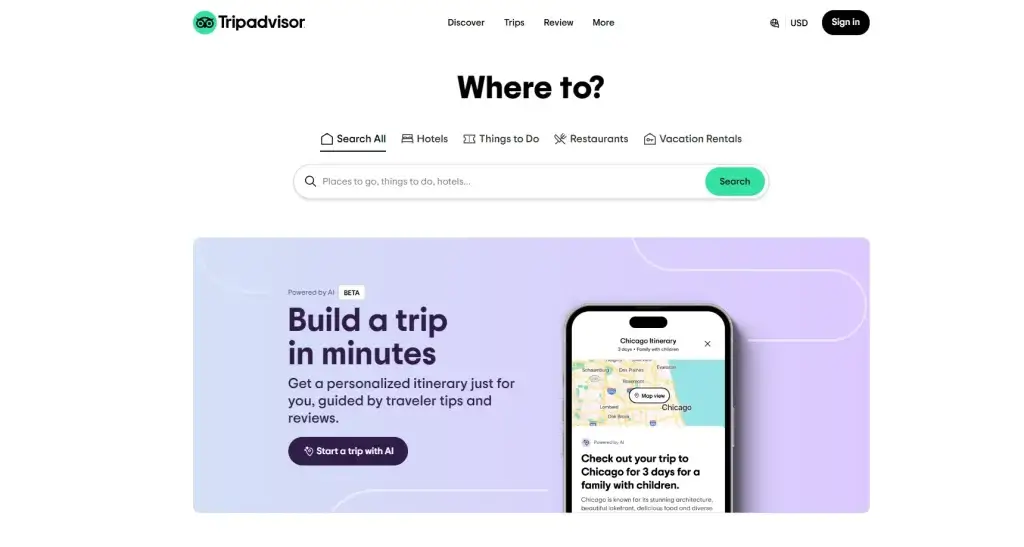
Tripadvisor is one of the world’s largest travel review platforms and also functions as a hotel booking and comparison tool. Unlike traditional booking websites, Tripadvisor focuses heavily on user-generated content, including reviews, ratings, and real traveler photos.
The platform allows users to compare hotel prices across multiple booking sites, helping travelers find the best available deals. It also provides detailed insights into hotel quality based on millions of real guest experiences. This makes it especially useful for travelers who prioritize research and want to avoid poor-quality accommodations.
Tripadvisor covers a wide range of travel-related information, including hotels, restaurants, attractions, and travel forums. While bookings are often completed through third-party partners, the platform plays a key role in helping users decide where to stay by offering transparent and detailed feedback from real travelers worldwide.
Pros
- Millions of real guest reviews
- Helps compare multiple booking sites at once
- Honest ratings and traveler photos
- Useful for checking hotel quality before booking
- Strong reputation for reviews and research
Cons
- Not always the cheapest booking option
- Booking is often redirected to third-party sites
- Interface can feel less direct for final booking
These platforms give you access to thousands of hotels in different price ranges and locations. You can also compare guest ratings, see real photos, and check detailed descriptions of each property. This helps you make a more informed decision before booking your stay.
Step 3: Use Filters to Narrow Your Search
After searching for hotels online, you will usually see a large number of options. Filters help you reduce this list quickly so you can focus only on hotels that match your preferences. Using filters is one of the most effective ways to save time and avoid confusion during hotel booking.
You can filter by:
- Price range
- Star rating
- Guest reviews
- Location
- Amenities such as pool, breakfast, Wi-Fi, air conditioning
- Property type such as hotel, resort, apartment, or hostel
By applying these filters, you can immediately remove hotels that do not fit your needs. This makes the search process more organized and helps you compare only relevant options. It also increases your chances of finding a hotel that matches both your budget and comfort level.
Step 4: Compare Hotels
Once you have a shortlist of hotels, the next step is to compare them carefully. It is important not to book the first hotel you see, even if it looks good. Taking time to compare at least two or three options can help you find better value and avoid disappointment.
Compare based on:
- Price, including taxes and extra fees
- Location and distance from key attractions
- Guest ratings and recent reviews
- Available facilities such as Wi-Fi, breakfast, gym, or parking
- Cancellation policy and flexibility
Sometimes a hotel that is slightly more expensive offers better overall value because it includes more amenities, has a better location, or provides a more flexible cancellation policy. Careful comparison ensures you get the best balance of comfort, price, and convenience for your trip.
Step 5: Read Reviews Carefully
Guest reviews are one of the most important tools when choosing a hotel because they show real experiences from people who have already stayed there. While hotel photos and descriptions can look perfect, reviews give you a clearer idea of what to actually expect.
Reading reviews carefully helps you avoid poor choices and select a hotel that matches your expectations in terms of comfort, service, and overall quality.
Look for:
- Cleanliness of rooms and bathrooms
- Staff behavior and customer service
- Room comfort and bed quality
- Noise levels during day and night
- Safety of the hotel and surrounding area
It is also important to read both positive and negative reviews to get a balanced view. Sometimes a hotel may look good overall but still have repeated issues in specific areas.
Focus on recent reviews
Always prioritize reviews from the last few months because hotel conditions can change over time due to renovations, management changes, or maintenance issues. Recent feedback gives the most accurate and updated picture of the hotel experience.
Step 6: Check Hotel Policies
Before confirming your booking, it is very important to carefully read the hotel’s policies. Many travelers skip this step and later face unexpected problems such as extra charges or cancellation issues. Understanding the rules in advance helps you avoid stress and hidden costs.
Important policies:
- Cancellation and refund rules
- Check-in and check-out times
- Extra charges such as taxes, parking fees, or service fees
- Pet policies or smoking restrictions
Each hotel has its own set of rules, and these can vary widely. Some hotels offer free cancellation while others do not refund at all. Check-in and check-out times are also important to plan your arrival and departure smoothly.
Taking a few minutes to review these policies ensures a hassle-free stay and prevents unwanted surprises during your trip.
Step 7: Choose Your Room
After selecting a hotel, the next step is to choose the right room type. Most hotels offer several room options designed for different budgets, group sizes, and comfort levels. Choosing the correct room ensures a comfortable and enjoyable stay throughout your trip.
Common room types:
- Standard room
- Deluxe room
- Suite
- Family room
Each room type differs in size, features, and price. A standard room is usually more affordable and suitable for short stays, while deluxe rooms offer more space and better amenities. Suites provide premium comfort with separate living areas, and family rooms are designed for groups or families traveling together.
Choose based on:
- Your budget
- Number of guests
- Level of comfort you want
- Length of stay
- Special needs such as extra beds or accessibility
Selecting the right room helps you balance cost and comfort while ensuring your stay meets your expectations.
Step 8: Book the Hotel
Once you have chosen your hotel and room type, you can proceed to book your stay. The booking process is usually simple and can be completed in a few minutes on most travel websites or apps.
Follow these steps:
- Select your travel dates
- Choose your preferred room type
- Enter guest details such as name and contact information
- Provide payment information securely
- Review all details carefully
- Confirm your booking
After completing the booking, you will receive a confirmation email or SMS with your reservation details. This confirmation usually includes your booking number, stay dates, hotel address, and payment summary. It is important to save this information and present it during check-in at the hotel.
Step 9: Save Your Booking Details
After successfully booking your hotel, it is very important to save all your reservation details. This ensures a smooth check-in process and helps you avoid confusion or delays when you arrive at the hotel.
After booking, make sure to:
- Save your confirmation email
- Note down your reservation number
- Keep the hotel contact details handy
These details act as proof of your booking and are often required during check-in. Having them easily accessible on your phone or printed copy can save time and reduce stress, especially if there are any issues with your reservation.
Tips for Booking a Hotel
Following a few smart strategies can help you save money and improve your overall hotel experience.
Helpful tips include:
- Book early to get better prices and availability
- Compare multiple booking websites before confirming
- Avoid peak travel seasons when prices are higher
- Look for discounts, promo codes, and special deals
- Always check the cancellation policy before booking
These simple habits can help you find better hotels at lower prices while avoiding unnecessary problems during your trip.
Conclusion
Learning how to book a hotel becomes easy when you follow a clear step-by-step process. By understanding your travel needs, researching hotels online, using filters, comparing options, reading reviews, checking policies, choosing the right room, and carefully completing your booking, you can confidently find the best place to stay.
A little research and planning before booking can greatly improve your travel experience. It helps you stay within budget, enjoy better comfort, and avoid last-minute stress. With the right approach, every trip becomes more enjoyable, organized, and worry-free.
FAQs About How to Book a Hotel
1. What is the easiest way to book a hotel?
The easiest way is to use online travel websites or apps. You simply enter your destination, travel dates, compare hotels, and confirm your booking in a few clicks.
2. Which websites are best for booking hotels?
Some of the most popular and trusted hotel booking sites include:
1. Trip.com
2. Expedia
3. Agoda
4. Tripadvisor
These platforms allow you to compare prices, read reviews, and check availability easily.
3. How can I get the cheapest hotel prices?
To get cheaper prices:
1. Book early
2. Compare multiple websites
3. Travel during off-peak seasons
4. Look for discounts and promo codes
5. Be flexible with your travel dates
4. Is it better to book a hotel online or directly?
Both options are good. Online booking sites offer easy comparison and deals, while direct booking may offer better customer support or extra perks like upgrades or free breakfast.
5. What should I check before booking a hotel?
Before booking, always check:
1. Price including taxes
2. Guest reviews
3. Location
4. Amenities
5. Cancellation policy
6. Can I cancel a hotel booking after confirming it?
Yes, but it depends on the hotel’s cancellation policy. Some bookings offer free cancellation, while others may charge a fee or be non-refundable.
7. How do I know if a hotel is safe and good?
Check:
1. Recent guest reviews
2. Hotel ratings
3. Photos from guests
4. Location safety
5. Customer service feedback
8. What details are needed to book a hotel?
You usually need:
1. Full name
2. Contact information
3. Check-in and check-out dates
4. Payment method
9. Do hotels charge extra fees?
Yes, some hotels may charge extra for:
1. Taxes
2. Parking
3. Resort fees
4. Additional services
5. Always check the final price before confirming.
10. When is the best time to book a hotel?
The best time is usually 2 to 8 weeks before your trip. Booking early often gives you better prices and more choices.