
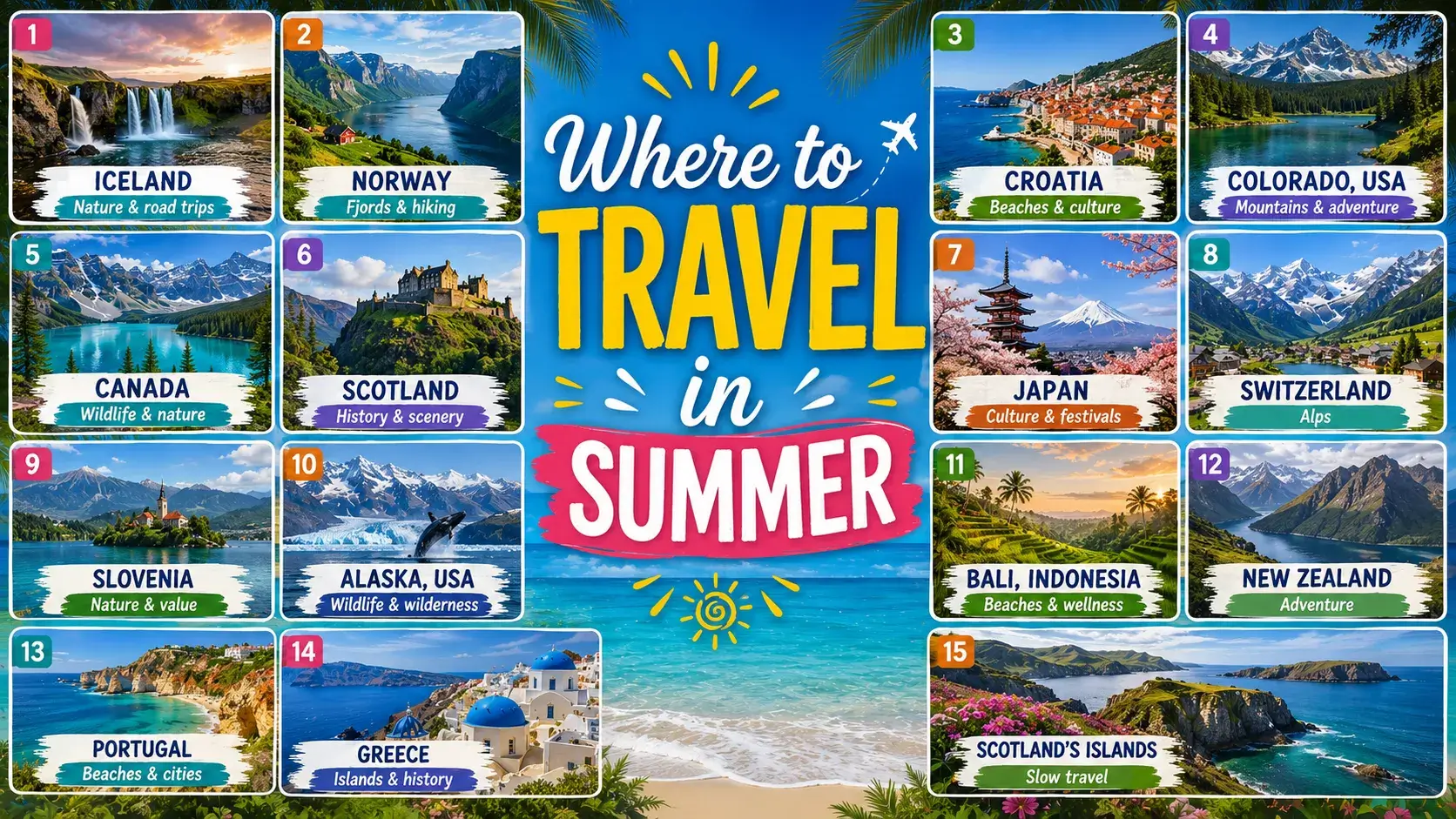
Summer Travel Has Changed: Look Beyond the Usual Hotspots
Summer is often treated as the easiest season for travel. Schools close, families have more flexibility, outdoor attractions stay open longer, and cities around the world fill their calendars with festivals, concerts, markets, and cultural events. But choosing where to travel in summer is not as simple as picking a famous beach and booking a flight. Climate conditions are becoming an increasingly important part of the decision. In 2026, travelers are showing growing interest in cooler destinations and nature-focused trips, while extreme summer heat has affected parts of Europe and made the traditional Mediterranean vacation less comfortable during some periods. Lonely Planet’s 2026 travel trends specifically identified the rise of “coolcations,” with travelers looking toward milder destinations instead of automatically choosing the hottest summer locations.
That shift creates an exciting opportunity. Instead of asking only, “Where is popular in summer?” ask a better question: What kind of summer experience do I actually want? You might want dramatic mountains, long daylight hours, beautiful beaches, historic cities, wildlife, food, road trips, or simply a place where you can walk around without feeling exhausted by the heat. This guide explores some of the best summer destinations for different travel styles, including Iceland, Norway, Croatia, Colorado, Canada, Scotland, Japan, and several other choices. The goal is not to give you one universal winner, because the perfect destination for a family is not necessarily the perfect destination for a couple, solo traveler, or adventure lover.
How to Choose the Right Summer Destination
The smartest summer destination depends on four things: weather, activities, budget, and travel style. Weather should probably come first because it can completely change your experience. A destination that looks wonderful in photographs may be uncomfortable if temperatures are extreme, while a place that receives less attention can become your favorite trip because the climate is perfect for hiking, sightseeing, and outdoor dining. You should also think about whether you prefer a fast-paced city vacation or a slower nature escape. Summer is particularly valuable for northern destinations because long daylight hours can give you much more time to explore.
Budget is another major factor. Peak summer can mean higher airfare, hotel prices, and crowds in popular destinations, so flexibility can make a major difference. Traveling in June or September rather than the busiest weeks of July and August may offer a better balance between weather, availability, and price. If you are traveling during the hottest part of summer, consider destinations with mountains, coastal breezes, higher elevations, or northern climates. The key is to match the destination with the experience you want rather than forcing every summer vacation into the same beach-and-sun formula.
15 Best Places to Travel in Summer
There is no single list that can satisfy every traveler, but some destinations consistently stand out because summer unlocks experiences that are difficult or impossible during other seasons. Northern Europe becomes especially attractive because of long daylight hours, while mountain destinations in North America offer excellent conditions for hiking, road trips, and wildlife viewing. Croatia provides the classic Adriatic experience, although its popularity means planning ahead matters. Japan offers extraordinary festivals and cultural experiences, but summer heat and humidity require careful planning. Iceland is particularly interesting for travelers who want a cooler escape and unusually long days.
The destinations below cover a range of travel styles rather than simply listing the world’s most famous vacation spots. Some are ideal for beaches, some for hiking, some for families, and others for travelers who want culture and food. Current travel trends also suggest that nature-driven and cooler destinations are becoming increasingly attractive as travelers adapt to hotter summers.
Iceland: The Ultimate Cool Summer Escape
Iceland is one of the strongest answers to the question of where to travel in summer if you dislike intense heat. Summer transforms the country into a landscape of waterfalls, volcanic terrain, glaciers, black-sand beaches, geothermal areas, and long twilight evenings. From roughly mid-May to mid-July, Iceland experiences the midnight sun effect, meaning the country never becomes completely dark during the night. On Grímsey, which sits on the Arctic Circle, the phenomenon is particularly dramatic, while other parts of Iceland experience extremely long daylight hours.
This unusual light changes the rhythm of a vacation. You can visit waterfalls late in the evening, take a scenic drive after dinner, photograph landscapes under soft golden light, or explore popular attractions when daytime crowds begin to disappear. Summer is also one of Iceland’s busiest travel periods, so planning matters, particularly around the most famous stops along the South Coast and Ring Road. If you want a memorable road trip, build your itinerary around Reykjavík, the Golden Circle, the South Coast, and selected areas of the Ring Road rather than trying to see everything in a few days.
Norway: Fjords, Mountains, and Endless Summer Light
Norway is another outstanding choice for travelers who want cool weather and spectacular scenery. Summer is when the country’s fjords, mountain roads, waterfalls, hiking trails, and coastal towns become especially accessible. Instead of spending your vacation inside museums or hotels because of snow and ice, you can spend your days walking through dramatic landscapes and your evenings enjoying unusually long daylight. Places such as Bergen, the Lofoten Islands, Tromsø, and the fjord regions provide very different experiences, so Norway works well for both first-time visitors and repeat travelers.
The best thing about Norway may be the feeling of space. A road can curve around a mountain, reveal a deep blue fjord, and suddenly make the entire trip feel like a movie set. Summer also gives hikers better access to many trails, although mountain weather can still change quickly. Travelers should not assume that long daylight means guaranteed warm weather, particularly in northern regions. Pack layers, waterproof clothing, and comfortable walking shoes, and think of Norway as an outdoor adventure rather than simply a city sightseeing destination.
Croatia: Beaches, Islands, and Adriatic Charm
If your idea of summer involves swimming, seafood, historic streets, and evenings beside the sea, Croatia is an obvious contender. Lonely Planet named Croatia its number-one destination for summer 2026, highlighting the Dalmatian Coast, Dubrovnik, Split, Hvar, and the country’s islands. The Adriatic coastline combines clear water with medieval architecture, island villages, restaurants, and lively summer nightlife. You can spend the morning exploring an old town, the afternoon swimming, and the evening eating grilled seafood beside the water.
The challenge is popularity. July and August can bring large crowds to famous destinations, especially Dubrovnik and other well-known coastal locations. If you want a more relaxed experience, consider traveling in June or looking beyond the most famous stops. Istria, the northern Adriatic region, offers a different atmosphere with vineyards, hill towns, food, and coastal scenery. You can also use Croatia as a base for island-hopping, but remember that summer transportation schedules and accommodation availability can become busy. Croatia is best for travelers who want a traditional European summer vacation with a strong mixture of culture and beach time.
Colorado: America’s Summer Mountain Playground
Colorado offers a completely different version of summer travel. Instead of Mediterranean beaches, imagine alpine lakes, rocky peaks, hiking trails, mountain towns, scenic drives, outdoor concerts, farmers markets, and cool evenings. Lonely Planet included Colorado among its best summer destinations for 2026, pointing to activities ranging from hiking and mountain biking to festivals, art events, birdwatching, and outdoor dining.
Summer is an excellent time to explore Colorado’s mountain regions because many high-elevation roads and trails become accessible. Denver can work as a starting point, but the real attraction is outside the city. Rocky Mountain National Park, Estes Park, Breckenridge, Aspen, Telluride, and other mountain communities can form the backbone of a road trip. Because elevation affects temperature and weather, conditions can vary significantly from one location to another. A Colorado summer trip is ideal for people who want activity rather than relaxation: wake up early, hike a trail, enjoy lunch in a mountain town, and finish the day watching the sunset over the Rockies.
Canada: A Summer Destination for Nature Lovers
Canada is enormous, which means summer can look completely different depending on where you go. Vancouver offers mountains, ocean, food, and urban attractions, while the Canadian Rockies provide dramatic landscapes around Banff and Jasper. Eastern Canada delivers a different experience with cities, coastlines, forests, and historic communities. Current 2026 travel interest has also been strong for Canadian destinations, with Vancouver, Toronto, Montreal, and nature-focused places receiving attention from travelers seeking both city experiences and outdoor adventures.
For a classic Canadian summer, consider combining a city with a national park or mountain destination. You could spend several days exploring Vancouver before heading toward the Rockies, or build a road trip around Alberta’s mountain landscapes. Summer is particularly attractive because outdoor activities are widely available, from hiking and kayaking to wildlife watching and scenic drives. If you prefer fewer crowds, look beyond the most famous viewpoints and explore smaller communities and less-visited trails. Canada rewards travelers who slow down because the distances are huge and the scenery changes constantly.
Scotland: Castles, Highlands, and Coastal Adventures
Scotland is perfect for travelers who prefer atmosphere over tropical heat. Summer brings longer days to the Highlands, making it easier to combine castles, historic towns, scenic drives, hiking, and coastal landscapes in one trip. Edinburgh provides culture, architecture, restaurants, and festivals, while the Highlands offer a much more rugged experience. The Isle of Skye, Glencoe, Cairngorms, and the northern coast can all be incorporated into a road trip depending on how much time you have.
Scotland’s weather is famously unpredictable, but that is part of its personality. You may experience sunshine, mist, rain, and wind within the same day, so packing layers is essential. The reward is a landscape that can look dramatically different from one hour to the next. Instead of planning every minute, leave room for scenic stops and spontaneous detours. Summer is especially good for travelers who enjoy photography, history, hiking, whisky culture, literature, and quiet countryside. It is also a strong choice if you want Europe without committing to the intense heat currently affecting parts of southern Europe.
Japan: Festivals, Food, and Summer Culture
Japan is fascinating in summer, but it requires a little more planning than some travelers expect. Much of the country becomes hot and humid, yet summer also brings fireworks, festivals, traditional dances, mountain escapes, beaches, and seasonal food. Japan’s official tourism organization describes summer as a season filled with fireworks, festivals, regional celebrations, and outdoor activities.
August can be particularly exciting because major events include Tokushima’s Awa Odori and Aomori’s Nebuta Matsuri, both famous for colorful performances, illuminated floats, dancing, and festival energy. However, the early and middle part of August overlaps with the Bon holiday period, which is one of the busiest and more expensive periods for domestic travel in Japan. June presents a different challenge because the rainy season affects much of the country, although Hokkaido is relatively less affected. If summer is your only opportunity to visit Japan, do not cancel the idea simply because of the heat. Instead, build a smarter itinerary with early sightseeing, indoor attractions during the hottest hours, and cooler destinations such as Hokkaido or mountain areas.
Switzerland: An Alpine Summer Dream
Switzerland may be one of the best places to travel in summer for travelers who want scenery without giving up comfortable infrastructure. The Alps become a playground for hiking, cable-car rides, scenic trains, cycling, and lake activities. Towns such as Interlaken, Lucerne, Zermatt, and Lauterbrunnen provide easy access to mountain landscapes while still offering hotels, restaurants, transportation, and other conveniences.
A Swiss summer vacation works particularly well for families and couples because you do not need to be an expert hiker to enjoy the mountains. Cable cars and trains can take you to viewpoints that would otherwise require serious climbing. You can spend one day hiking around a lake and the next exploring a historic city. The main drawback is cost, since Switzerland can be expensive compared with many other European destinations. Travelers on a budget should research transportation passes, accommodation outside the most famous resort towns, and self-catering options before booking. If scenery is your priority, however, Switzerland can deliver an exceptionally polished mountain vacation.
Slovenia: A Smaller Destination With Big Scenery
Slovenia is an excellent choice for travelers who want European scenery without building their entire vacation around the biggest tourist capitals. Lake Bled is the country’s famous postcard attraction, but the country offers much more, including Lake Bohinj, the Julian Alps, Ljubljana, the Soča Valley, caves, forests, and smaller towns. Its compact size makes it possible to combine several experiences within a relatively short trip.
Summer is particularly good for outdoor exploration. You can hike, cycle, kayak, swim, explore mountain valleys, and then return to Ljubljana for restaurants and cultural attractions. The combination of natural scenery and manageable distances is one of Slovenia’s biggest advantages. It is also a useful option for travelers who find Switzerland too expensive or Croatia too crowded. Instead of racing between attractions, rent a car or use local transportation and give yourself enough time to enjoy the landscape. Slovenia demonstrates that a memorable summer vacation does not require the largest country or the most famous landmark.
Alaska: Go Wild This Summer
For travelers who want wilderness rather than urban sightseeing, Alaska is difficult to beat. Summer brings long daylight hours and better access to many outdoor experiences, making it a natural choice for hiking, wildlife viewing, scenic drives, fishing, kayaking, and boat excursions. The scale is different from most conventional vacations. Mountains feel larger, roads seem longer, and wildlife can become part of the itinerary rather than simply an occasional sighting.
Alaska works best when you accept that you cannot see everything. Choose a region and explore it properly instead of trying to cover the entire state. Anchorage can serve as a practical starting point, while destinations around Denali, the Kenai Peninsula, and Southeast Alaska provide very different experiences. Summer demand can be high, so accommodation and popular excursions should be planned early. If your dream vacation involves glaciers, bears, mountains, forests, and enormous open landscapes, Alaska deserves a place near the top of your list.
Bali: A Tropical Summer Escape
Bali remains a popular option for travelers who want warm weather, beaches, temples, rice terraces, wellness experiences, and tropical scenery. But the best Bali trip is not necessarily the one that follows the most crowded tourist route. Instead of spending the entire vacation in busy areas, consider dividing your time between the coast and quieter inland regions. Places around Ubud and smaller villages can provide a slower experience, while areas such as Sidemen offer landscapes and cultural experiences away from some of the busiest resort zones.
Bali is particularly appealing for travelers who want variety without constantly changing countries or regions. One day can involve a beach morning, another can be spent exploring temples, and another can focus on food, wellness, or a countryside excursion. The important thing is to research local conditions and avoid assuming that every part of the island feels the same. Responsible travel also matters because Bali receives large numbers of visitors. Choosing locally owned businesses, respecting religious customs, reducing plastic waste, and avoiding unnecessary pressure on natural resources can make your trip more rewarding for both you and the destination.
New Zealand: Visit for a Different Kind of Summer
If you are searching for summer destinations from the Northern Hemisphere, remember that seasons reverse south of the equator. June through August is winter in New Zealand, which makes it a very different choice from Iceland, Croatia, or Greece. That does not make it a bad summer destination. It simply means you need to decide what “summer travel” means to you. If you want warm beaches, New Zealand should probably wait for its own summer, but if you want skiing, dramatic winter landscapes, and fewer traditional summer crowds, the June-August period can be appealing.
New Zealand’s greatest strength is variety. The North Island offers volcanic landscapes, Māori culture, geothermal areas, and cities, while the South Island delivers mountains, lakes, fjords, and adventure activities. If you have flexibility, the country’s own summer from December through February is the better choice for hiking, road trips, beaches, and outdoor exploration. This is a useful reminder that the best travel advice starts with your actual location and travel dates. A destination does not automatically become ideal simply because a calendar says it is summer where you live.
Portugal: Beaches, Food, and Easygoing City Breaks
Portugal remains a strong choice for travelers who want a combination of cities, coastline, food, and culture. Lisbon works well for a city break, Porto provides a more intimate northern experience, and the Algarve offers beaches and coastal scenery. Travelers who prefer a slower itinerary can combine smaller towns with regional food and wine experiences instead of spending every day in major tourist centers.
Portugal is especially attractive because it can accommodate different budgets and travel styles. You can build a luxury trip around boutique hotels and fine dining or create a more economical itinerary using public transportation, guesthouses, and local restaurants. Summer is busy in popular coastal areas, so early booking is useful. If heat is a concern, structure sightseeing around mornings and evenings and use the middle of the day for slower activities. Portugal is a good example of a destination where food can be as important as sightseeing. Fresh seafood, pastries, regional dishes, and local markets can turn a simple city trip into a much richer experience.
Greece: Choose the Right Island for Your Summer Style
Greece is one of the classic answers to where to travel in summer, especially for people who dream about blue water, whitewashed villages, ancient ruins, and long dinners by the sea. But Greece is not one destination. The country contains numerous islands and mainland regions, each with a different personality. Some are famous for nightlife, others for beaches, history, hiking, food, or quieter villages.
The mistake is trying to copy someone else’s Greek itinerary without considering your travel style. If you want nightlife, choose accordingly. If you want peace, look for smaller islands or less-famous areas. If history matters most, Athens and mainland archaeological sites may deserve more time. If beaches are your priority, research water access and transportation rather than simply choosing an island because it appears frequently on social media. Summer is peak season, so prices and crowds can rise significantly. A little research can help you find a Greek destination that feels like a vacation rather than a queue for photographs.
How to Avoid Extreme Summer Heat
Summer travel planning now requires more attention to climate than it did in the past. During 2026, parts of Europe experienced severe heat, drought, wildfires, and unusually high temperatures, with western Europe recording an exceptionally hot June-July period. These conditions do not mean every European destination should be avoided, but they do mean travelers should check current forecasts and local warnings before leaving. A beautiful itinerary can quickly become exhausting when temperatures make walking, sightseeing, and outdoor activities difficult.
One practical strategy is to choose cooler destinations such as Iceland, Norway, Scotland, the Canadian Rockies, or high-elevation mountain regions. Another is to change your daily schedule. Visit outdoor attractions early in the morning, take a slower midday break, and explore again in the evening. Carry water, use sun protection, wear breathable clothing, and never underestimate the effect of heat when you are walking several miles in a city. Travelers with health concerns should be particularly cautious and consult appropriate medical advice before traveling in extreme heat.
Best Summer Destinations by Travel Style
The easiest way to narrow down your choices is to start with what you want to do rather than where you want to go. Beach lovers may naturally gravitate toward Croatia, Greece, Portugal, or Bali, while hikers might prefer Norway, Switzerland, Iceland, Colorado, Canada, or Alaska. Families may appreciate destinations where transportation and activities are relatively straightforward, while couples may prioritize scenery, food, romantic towns, and slower evenings. Solo travelers often benefit from destinations with strong transportation networks and a variety of activities that can be enjoyed independently.
If your priority is escaping heat, look north. If your priority is beaches, focus on coastal destinations. If you want adventure, choose mountains or wilderness. If you want culture, food, and history, look toward cities and regions where local experiences are as important as famous attractions. This simple approach is much more useful than searching for a generic “top 10 summer destinations” list because it makes the recommendation personal. The best summer destination is the one that makes your preferred vacation easier, not the one with the most Instagram posts.
How to Plan a Better Summer Vacation
Once you choose your destination, the next step is building an itinerary that leaves room to breathe. One of the biggest mistakes travelers make is trying to see too much. A vacation should not feel like a race from airport to hotel to landmark to train station. If you are visiting a country for seven days, choose two or three main bases rather than five or six. This gives you time to experience neighborhoods, local restaurants, markets, parks, and ordinary moments that often become the best memories.
Book the elements that are likely to sell out first, such as popular accommodation, trains, national park permits, ferries, and major tours. Then leave flexible time around them. Check passport and visa requirements, travel insurance, weather forecasts, local transportation, and entry rules before departure. Keep digital copies of important documents and make sure you have access to your payment methods. Most importantly, create a realistic daily schedule. Three meaningful experiences can be far better than ten rushed ones, especially during the long and sometimes exhausting days of peak summer travel.
Final Thoughts: Where Should You Travel This Summer?
The answer to where to travel in summer depends on the kind of memories you want to create. Iceland and Norway are excellent for travelers who want dramatic landscapes and cooler conditions. Croatia and Greece are ideal for classic European beach vacations, while Colorado, Canada, and Alaska offer mountains, wildlife, and outdoor adventure. Japan delivers a completely different experience through festivals, food, culture, and regional traditions, although travelers should prepare for heat and humidity during much of the season. Current travel trends show that cooler destinations and nature-focused experiences are becoming increasingly attractive, making northern and high-elevation destinations especially interesting choices for modern summer travelers.
There is no perfect destination for everyone. A family may choose Canada, a couple may prefer Croatia, an adventure traveler may pick Alaska, and someone desperate to escape the heat may immediately choose Iceland. The important thing is to think beyond the destination’s popularity and ask whether the weather, activities, cost, transportation, and atmosphere match your expectations. Summer gives you an enormous menu of possibilities, so there is no reason to choose a vacation that makes you uncomfortable simply because it is famous. Pick the place that fits your version of a great summer, plan around current conditions, and leave enough space in your itinerary to enjoy the journey rather than just checking places off a list.
Frequently Asked Questions About Where to Travel in Summer
1. Where is the best place to travel in summer for cool weather?
Iceland, Norway, Scotland, parts of Canada, and mountain destinations such as Colorado and Switzerland are excellent choices for travelers who want to avoid intense summer heat. Iceland is particularly appealing because of its long daylight hours and dramatic natural scenery. Northern destinations can still experience changing weather, so travelers should pack layers and waterproof clothing rather than expecting consistently warm conditions.
2. Where should I travel in summer for beaches?
Croatia, Greece, Portugal, and Bali are strong options for a beach-focused summer vacation. Croatia and Greece are particularly appealing for travelers who want to combine beaches with European history, food, and culture. If you want a tropical atmosphere, Bali offers beaches alongside temples, rice terraces, wellness experiences, and local culture. Always check seasonal weather and crowd conditions before booking.
3. Is Japan a good place to visit in summer?
Yes, but travelers should prepare for heat and humidity in much of Japan. Summer also brings spectacular fireworks, festivals, traditional celebrations, mountain trips, and seasonal food. Japan’s official tourism guidance highlights major summer festivals and recommends light, breathable clothing for hot and humid conditions. August can be especially busy around the Bon holiday period, so advance planning is important.
4. What are the best summer destinations for families?
Canada, Switzerland, Scotland, Colorado, and Iceland can all work well for families, depending on children’s ages and interests. Destinations with a combination of nature, transportation, attractions, and family-friendly accommodation give parents more flexibility. For younger children, shorter travel distances and slower itineraries are usually better than trying to cover multiple cities in one trip.
5. When is the best time to book a summer vacation?
For popular destinations, booking several months ahead is generally a sensible strategy, particularly for flights, hotels, rental cars, trains, ferries, and national park accommodations. If your schedule is flexible, traveling in June or toward the end of August and into September can sometimes provide a better balance of availability, weather, and crowds. Always compare dates rather than assuming every week of summer costs the same.